Screen Cleaning Balls for Deblinding

Product buildup or blinding on vibrating screens is an ongoing challenge in many production facilities, decreasing production and increasing downtime. When deblinding balls are excited in a vibrating separator environment, they release near-size particles that would otherwise clog screens.

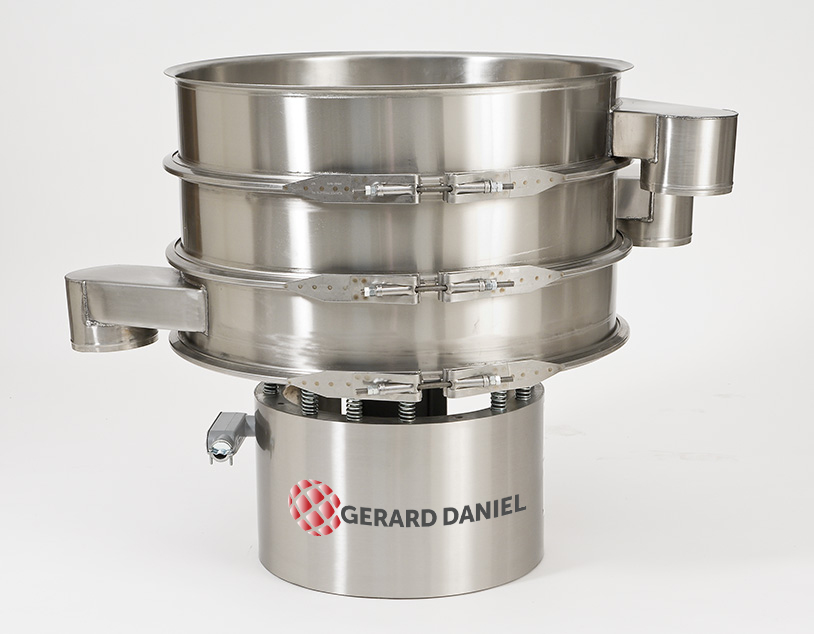
In a round separator machine, the balls are typically supported by a coarser screen located below the sizing screen. Vertical separator motion bounces the balls between the two screens. You want the proper combination of ball diameter and vertical motion to bounce the balls off the underside of the sizing screen with sufficient force to dislodge near-size particles.

Balls excel at deblinding near-size particles that are jagged or otherwise irregularly shaped. In fact, they typically outperform sliders in such applications. Producers also consider screening balls for use with shear-sensitive products. By themselves, balls tend to migrate to the outer edge of a round screen. As a result, cleaning is sometimes better at the periphery of the screen than at the center.

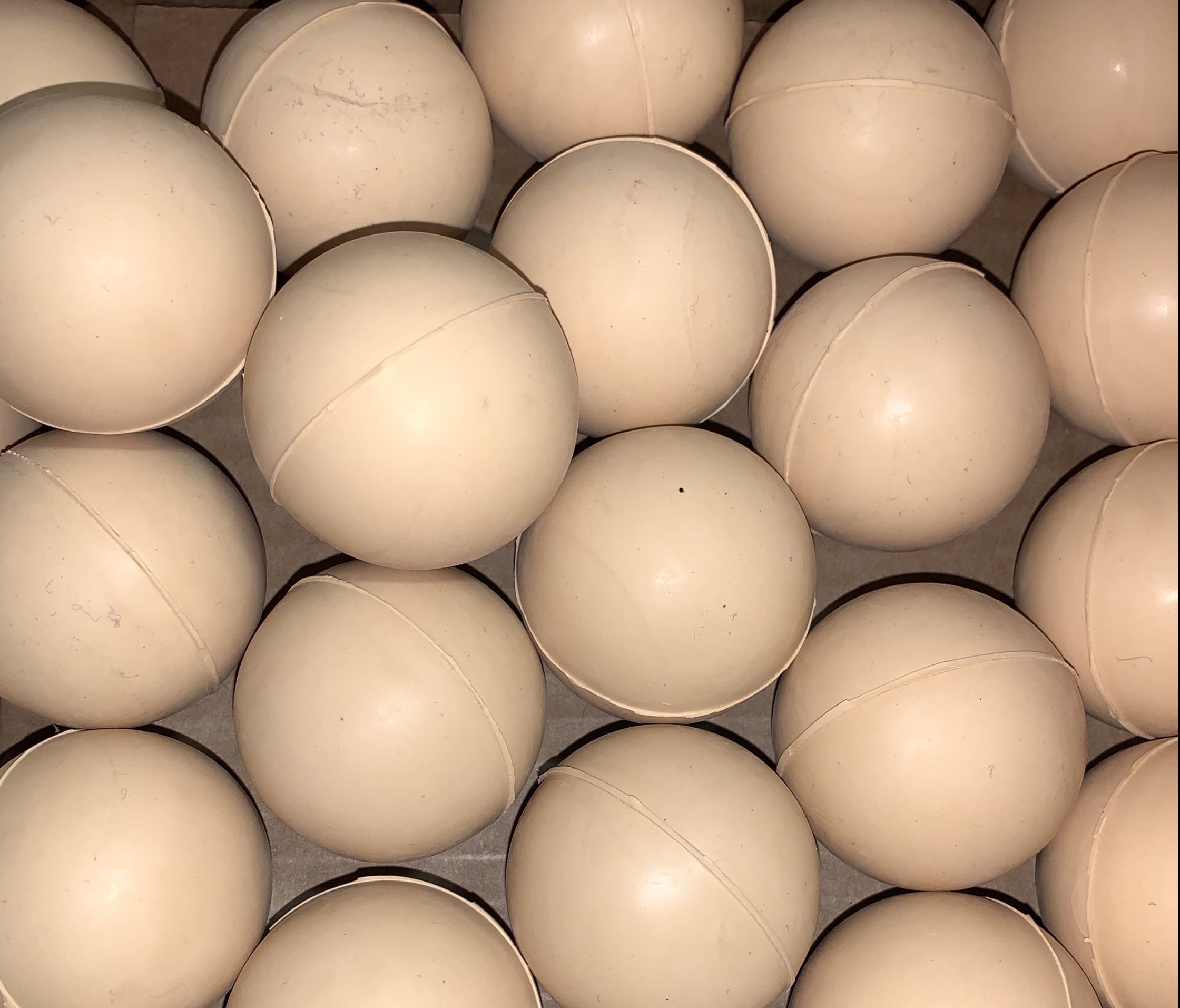
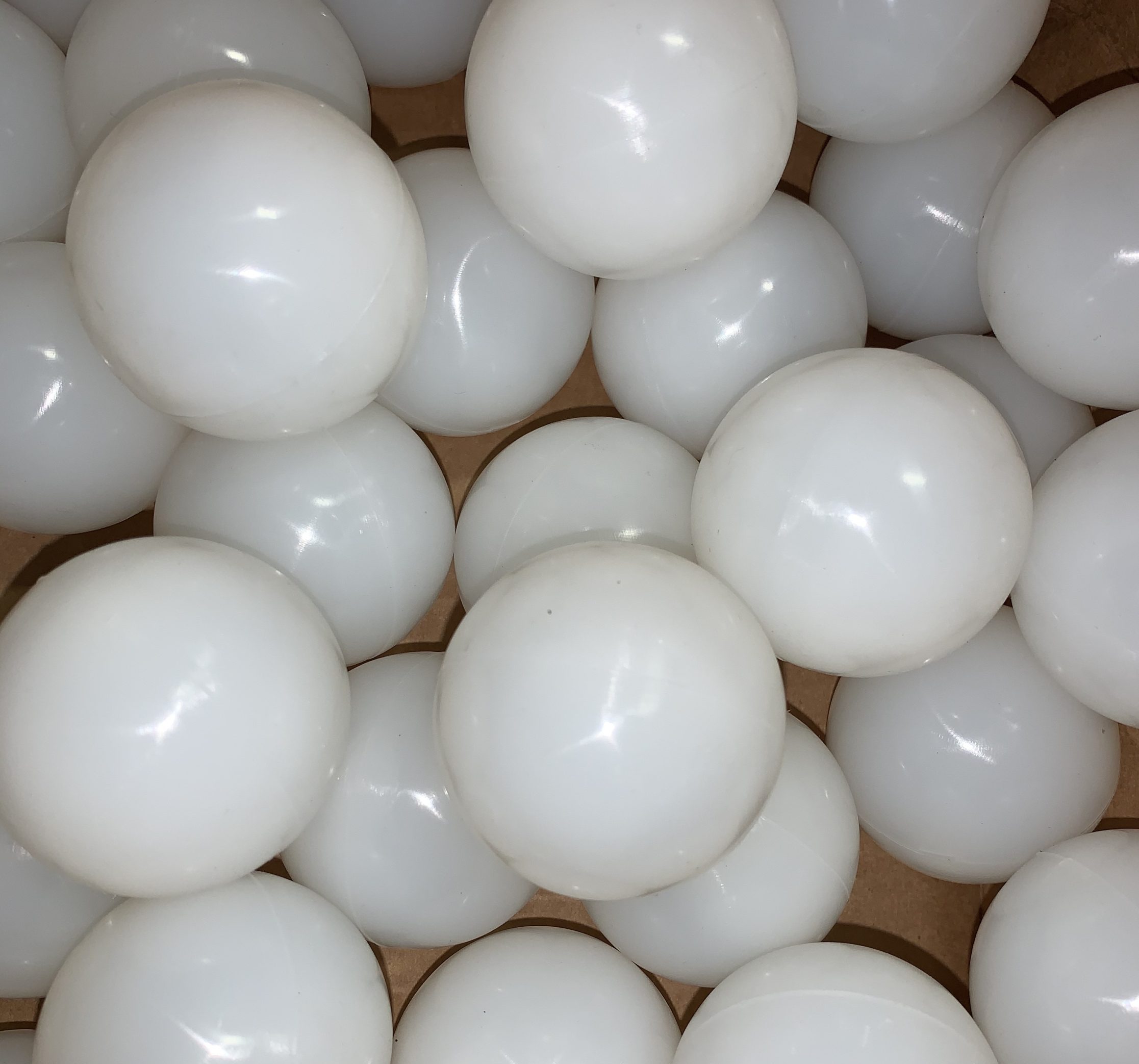
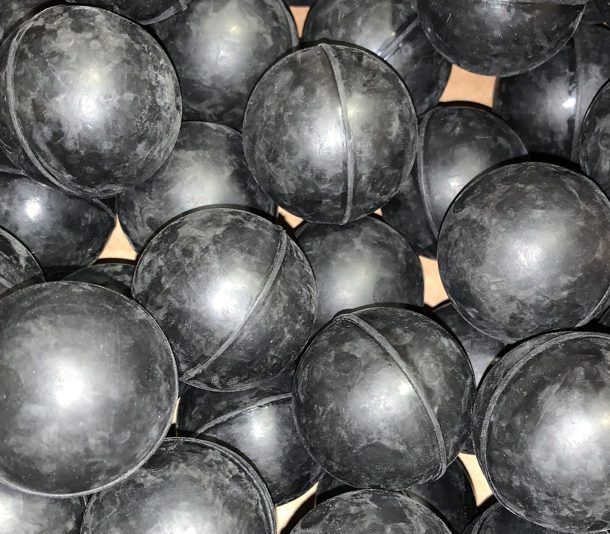
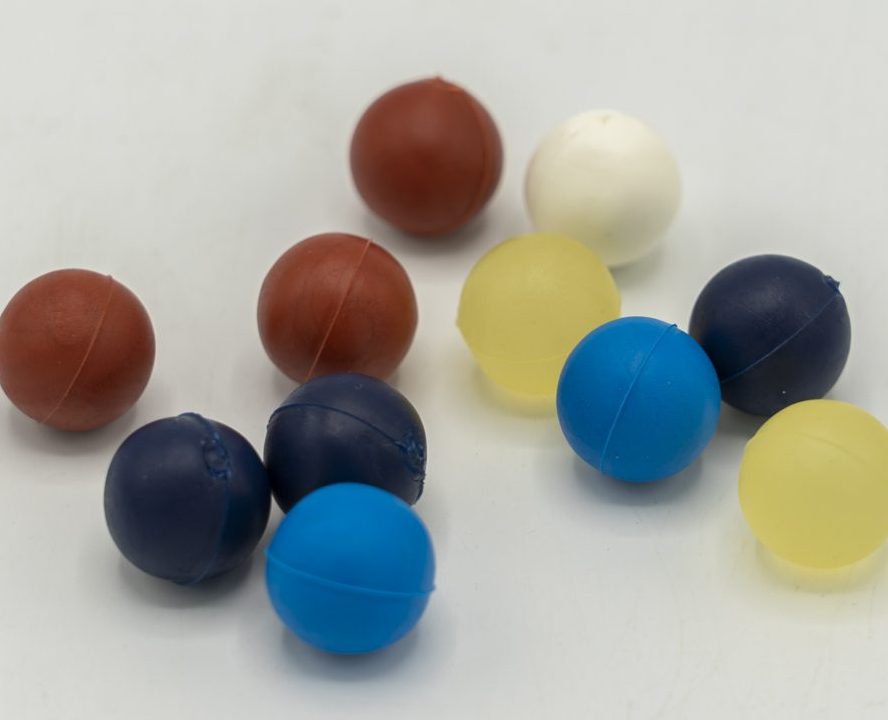
Screen cleaning balls are available in various diameters from 5⁄8″ to 2″. Select from five colors: clear, white, black, red, and tan.

Always specify screen cleaning balls made of materials suitable for your application. Please see the information below for recommendations.

  • EPDM – A general purpose compound used in some food grade applications. It is harder than natural rubber
  • Natural Rubber – Softer than EPDM, it is a good general purpose compound, suitable for food-grade applications
  • Neoprene – Very resistant to ozone, weather, fats and oils, making it useful in food-grade applications
  • Nitrile – Similar to neoprene, although it offers somewhat better abrasion resistance
  • Silicone – Resistant to high temperatures, wear-and-tear, ozone and oxidation

Frequently Asked Questions

Find answers to common questions about square/plain weave wire mesh.
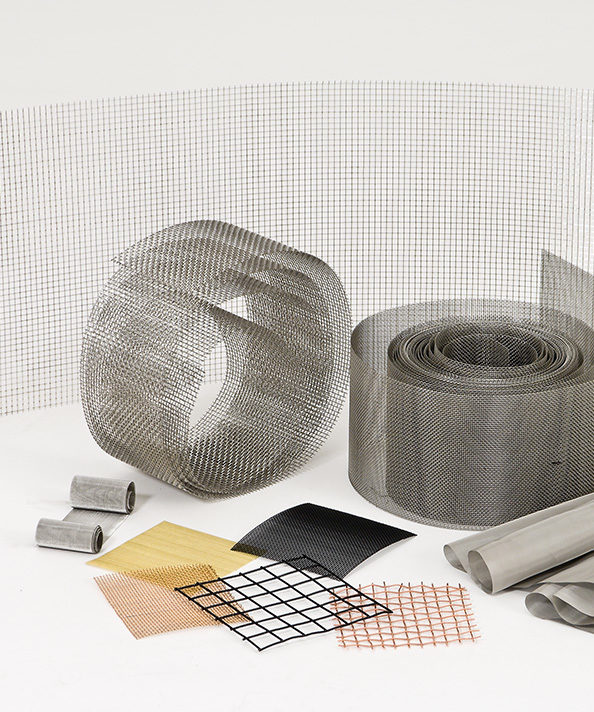
Square weave wire mesh, also known as plain weave wire cloth, is woven by passing each warp wire alternately over and under each shute wire, creating uniform square openings. This classic weave pattern delivers excellent stability, consistent aperture size, and versatility for filtration, screening, and architectural applications.

Gerard Daniel offers several variations of plain weave mesh, including square plain mesh, square twilled mesh, market grade mesh, bolting cloth (tensile bolting cloth), and mill grade mesh. Each differs in wire diameter, mesh count, and open-area percentage to meet specific flow, strength, and precision needs.

Our square wire mesh is available in stainless steel (304, 304L, 316, 316L, 321, 347, 430), Monel®, Inconel®, Incoloy®, nickel, Aluminum, brass, bronze, and copper. We also carry low-carbon steel (C1008) and DFARS-compliant stainless alloys for government and aerospace applications.

In plain weave, each wire crosses over and under one wire at a time, providing stability and fine filtration control. In twilled weave, each wire passes over two and under two adjacent wires, producing a smoother surface and greater strength — ideal for applications under high mechanical stress.

Market grade square mesh is the most commonly used industrial wire cloth, offering a balanced combination of wire diameter and mesh count for general-purpose screening, sieving, and filtering in chemical, mining, food processing, and construction industries.

Tensile bolting cloth is a fine plain-weave mesh made from smaller wire diameters to achieve higher open area and precise particle control. It’s widely used in sifting, powder coating, and liquid filtration processes that require accurate separation.

Mill grade mesh bridges the gap between market grade and bolting cloth. It provides slightly higher open area for efficient separation, making it a preferred choice for dewatering, particle classification, and general screening operations.

We stock over 5,000 mesh types ranging from coarse openings (2 mesh) to fine meshes over 500 mesh. Most rolls are 48 inches wide and a hundred feet long, with custom widths, slit rolls, and laser-cut shapes available upon request.

Yes. If your specification isn’t in stock, we can weave custom mesh in any alloy, wire diameter, or mesh count to meet your filtration or architectural requirements. We also offer laser cutting, stamping, and slitting for made-to-order parts.

Every mesh roll is inspected for weave accuracy, wire diameter consistency, and open-area uniformity. As both a manufacturer and user of our own wire cloth in filtration and separation systems, we maintain strict quality control and repeatable performance standards across all mesh grades.

Documents

Reference Data