Filtration

Inline Mesh Filters

As a highly versatile filter and suction strainer manufacturer, we provide our customers with complete, customized, in-house capabilities to meet their design and production needs from a single source. We build-to-print and develop solutions, collaborating with our customers to improve manufacturability and lower the cost of production

We fabricate filters for manufacturers of components used in fuel injection and hydraulic systems, refrigerant assemblies, agricultural spray systems, and many other similar applications.

Description

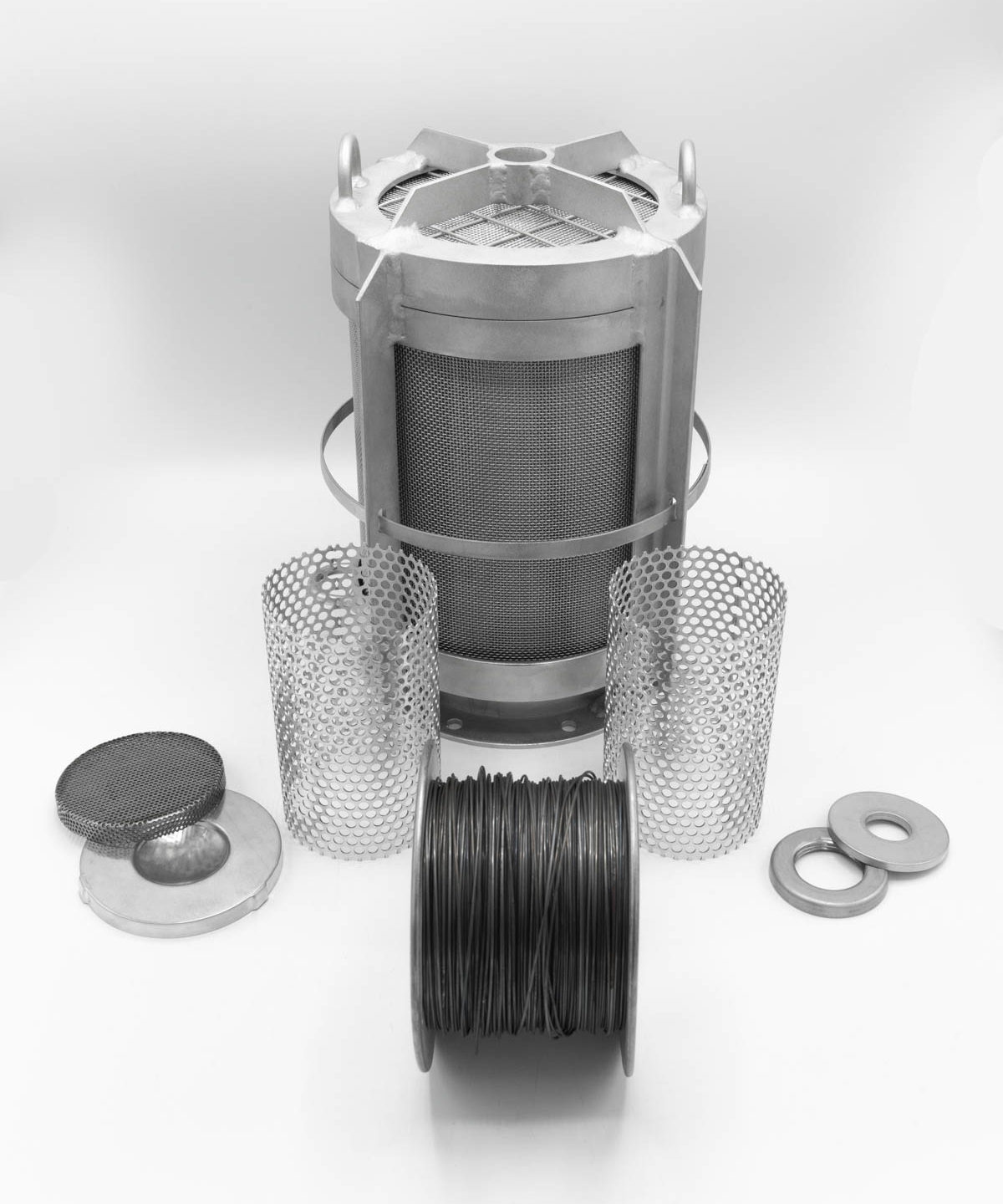
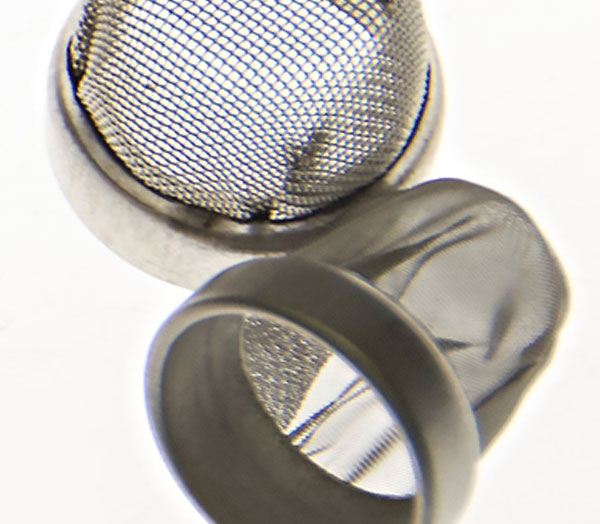
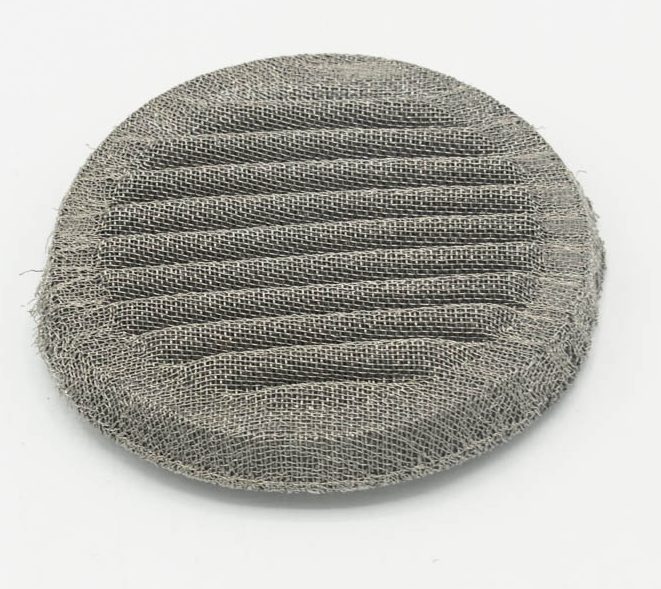
Inline mesh filters are often referred to as “last chance filters” and are used to catch whatever debris may be introduced from an upstream process to keep it out of the final system. In their basic form, they are not used for filtration or separation so much as they are intended to keep contaminants out of a process that could damage the internals. For added functionality, some manufacturers incorporate desiccates into their filters to remove moisture as well as particulate contaminants. From a simple mesh disk, cup, or cone to multi-component mesh cylinders crimp-fit with a metal flange or over-molded with a plastic frame, we are a completed, single-source provider.

Construction

  • Typically, 40 to 100 mesh stainless steel woven wire screen; custom mesh or material optional
  • Sizes from less than a milliliter to over 100 liter
  • All cutting, forming, and welding is done in-house
  • Plain mesh filters or apply secondary processes in-house
    • E.g., crimped to a metal mounting flange or over-molded with a plastic rim
  • Tested to burst pressure to ensure against seam separation or frame separation

Applications

Inline mesh filters are most often used in fuel injection systems and hydraulic systems, an important market application in the industrial vehicles segment. Inline mesh filters are also used in HVAC systems where inline filters are press-fitted into subassemblies for refrigerant lines. They are also important components in agricultural applications such as field spraying systems where they keep the spray nozzles clean and clog-free. Inline mesh filters are always incorporated into the OEM’s equipment and would not generally be replaced in the field.

  • Hydraulic systems
  • HVAC systems
  • Industrial Vehicles
  • Agricultural equipment

Frequently Asked Questions

Find answers to common questions about square/plain weave wire mesh.
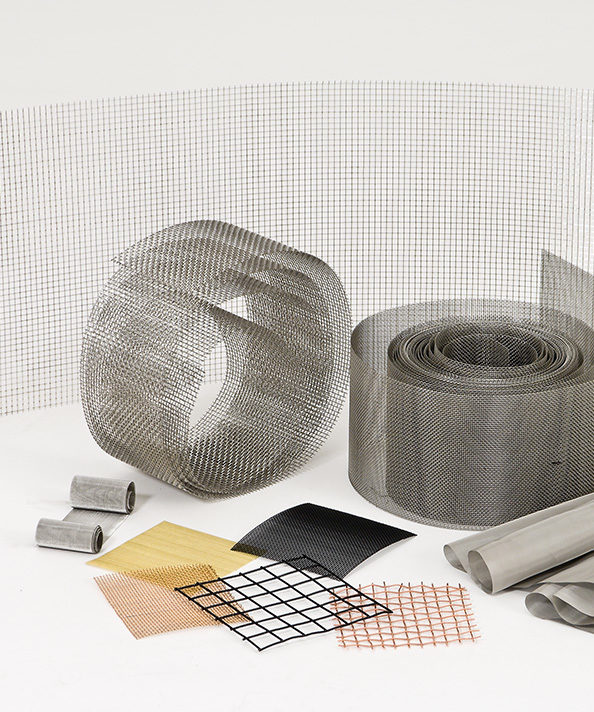
Square weave wire mesh, also known as plain weave wire cloth, is woven by passing each warp wire alternately over and under each shute wire, creating uniform square openings. This classic weave pattern delivers excellent stability, consistent aperture size, and versatility for filtration, screening, and architectural applications.

Gerard Daniel offers several variations of plain weave mesh, including square plain mesh, square twilled mesh, market grade mesh, bolting cloth (tensile bolting cloth), and mill grade mesh. Each differs in wire diameter, mesh count, and open-area percentage to meet specific flow, strength, and precision needs.

Our square wire mesh is available in stainless steel (304, 304L, 316, 316L, 321, 347, 430), Monel®, Inconel®, Incoloy®, nickel, Aluminum, brass, bronze, and copper. We also carry low-carbon steel (C1008) and DFARS-compliant stainless alloys for government and aerospace applications.

In plain weave, each wire crosses over and under one wire at a time, providing stability and fine filtration control. In twilled weave, each wire passes over two and under two adjacent wires, producing a smoother surface and greater strength — ideal for applications under high mechanical stress.

Market grade square mesh is the most commonly used industrial wire cloth, offering a balanced combination of wire diameter and mesh count for general-purpose screening, sieving, and filtering in chemical, mining, food processing, and construction industries.

Tensile bolting cloth is a fine plain-weave mesh made from smaller wire diameters to achieve higher open area and precise particle control. It’s widely used in sifting, powder coating, and liquid filtration processes that require accurate separation.

Mill grade mesh bridges the gap between market grade and bolting cloth. It provides slightly higher open area for efficient separation, making it a preferred choice for dewatering, particle classification, and general screening operations.

We stock over 5,000 mesh types ranging from coarse openings (2 mesh) to fine meshes over 500 mesh. Most rolls are 48 inches wide and a hundred feet long, with custom widths, slit rolls, and laser-cut shapes available upon request.

Yes. If your specification isn’t in stock, we can weave custom mesh in any alloy, wire diameter, or mesh count to meet your filtration or architectural requirements. We also offer laser cutting, stamping, and slitting for made-to-order parts.

Every mesh roll is inspected for weave accuracy, wire diameter consistency, and open-area uniformity. As both a manufacturer and user of our own wire cloth in filtration and separation systems, we maintain strict quality control and repeatable performance standards across all mesh grades.